What Is an llms.txt File and How to Create One: The Complete Guide for AI Visibility in 2026
Learn what an llms.txt file is, how it works, why it matters for AI search visibility, and how to create one. Discover how brands can improve AI discoverability and increase recommendations across platforms like ChatGPT, Claude, Gemini, and Perplexity.
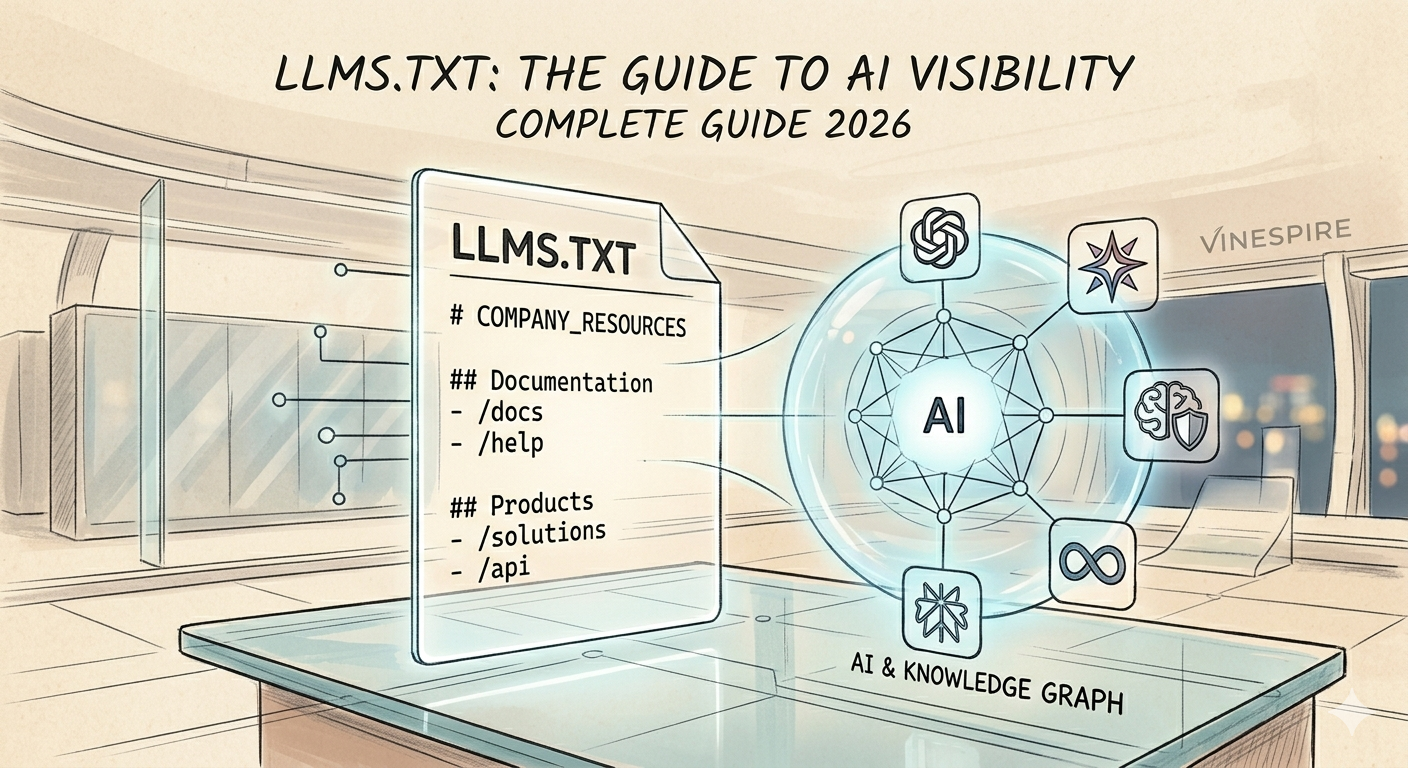
What Is an llms.txt File and How to Create One: The Complete Guide for AI Visibility in 2026
Meta Description: Learn what an llms.txt file is, how it works, why it matters for AI search visibility, and how to create one. Discover how brands can improve AI discoverability and increase recommendations across platforms like ChatGPT, Claude, Gemini, and Perplexity.
The Rise of AI Search Is Changing Website Visibility
For over two decades, businesses focused on optimizing websites for traditional search engines like Google and Bing. Today, a new challenge has emerged: getting discovered and recommended by AI systems.
Millions of people now ask AI assistants questions such as:
"What is the best CRM for small businesses?"
"Which project management software should I use?"
"What are the top marketing agencies in New York?"
"Which SEO tools do professionals recommend?"
Instead of showing a list of blue links, AI platforms generate direct answers. This means brands now need to optimize not only for search engines but also for Large Language Models (LLMs).
One of the newest developments in this space is the llms.txt file.
Many industry experts believe that llms.txt could become for AI systems what robots.txt became for search engines, a standardized way to help AI understand website content more effectively.
In this guide, you'll learn:
What an llms.txt file is
Why it matters for AI visibility
How it differs from robots.txt
How to create one
Best practices for implementation
How businesses can increase their chances of being recommended by AI platforms
What Is an llms.txt File?
An llms.txt file is a machine-readable text file placed at the root of a website that helps Large Language Models understand and access the most important content on that website.
Think of it as a curated guide for AI systems.
Instead of forcing an AI crawler to analyze thousands of pages, an llms.txt file points directly to:
Core documentation
Product pages
Service pages
Knowledge bases
FAQs
Key resources
Important company information
The goal is simple:
Help AI systems find the most relevant and authoritative information faster.
A typical llms.txt file lives at:
https://yourwebsite.com/llms.txt
Why Was llms.txt Created?
Modern websites are complex.
A single company website may contain:
Thousands of blog posts
Product pages
Navigation elements
JavaScript components
Archived content
Duplicate pages
For AI systems trying to understand a brand, this creates significant noise.
The llms.txt standard was proposed to provide:
Benefit | Description |
|---|---|
Better Context | Helps AI understand what matters most |
Faster Discovery | Reduces unnecessary crawling |
Cleaner Data | Points to authoritative resources |
Improved Accuracy | Helps AI generate better responses |
Easier Maintenance | Centralizes important references |
As AI search grows, structured guidance becomes increasingly valuable.
How Does an llms.txt File Work?
An llms.txt file acts as a roadmap.
Instead of exploring every page, AI systems can review the file and discover:
Which pages represent official information
Which documents are most authoritative
Which resources should be prioritized
For example:
# Company Name

Official resources and documentation.

## Products

- https://example.com/product-a
- https://example.com/product-b

## Documentation

- https://example.com/docs
- https://example.com/help-center

## Blog

- https://example.com/blog
This structure helps AI systems identify the most important content quickly.
llms.txt vs robots.txt
Many people confuse llms.txt with robots.txt, but they serve very different purposes.
Feature | robots.txt | llms.txt |
|---|---|---|
Purpose | Controls crawler access | Guides AI understanding |
Audience | Search engine bots | LLMs and AI systems |
Blocks Content | Yes | No |
Provides Context | No | Yes |
Recommends Resources | No | Yes |
Improves AI Discoverability | Limited | Yes |
Think of robots.txt as a gatekeeper.
Think of llms.txt as a tour guide.
Why llms.txt Matters for AI SEO
The SEO industry is experiencing one of the biggest transformations since Google's launch.
According to multiple industry reports:
AI-powered search usage has grown dramatically over the past two years.
Millions of daily queries are now handled by ChatGPT, Gemini, Claude, and Perplexity.
Users increasingly trust AI-generated recommendations before visiting websites.
This shift has created a new discipline often called:
AI SEO
Generative Engine Optimization (GEO)
AI Visibility Optimization
LLM Optimization
The goal is no longer just ranking in search results.
The goal is getting mentioned inside AI-generated answers.
An llms.txt file can contribute to that objective by making authoritative content easier to identify and understand.
What Should Be Included in an llms.txt File?
Not every page belongs in your llms.txt file.
Focus on pages that accurately represent your expertise.
Recommended Sections
Company Information
Include:
About page
Mission statement
Company overview
Products and Services
List:
Product pages
Service pages
Feature documentation
Knowledge Resources
Include:
Documentation
Tutorials
FAQs
Guides
Thought Leadership Content
Add:
Research reports
Industry studies
Original insights
Contact Information
Provide:
Official contact pages
Support resources
Sample llms.txt Template
Here's a practical example.
# Vinespire

Helping brands become discoverable and recommended across AI platforms.

## Main Website
https://vinespire.com

## Services
https://vinespire.com/services

## About
https://vinespire.com/about

## Resources
https://vinespire.com/blog

## Contact
https://vinespire.com/contact

## AI Visibility Resources
https://vinespire.com/blog/ai-seo-guide
https://vinespire.com/blog/llm-optimization
This format is simple, readable, and useful for both humans and machines.
How to Create an llms.txt File in 5 Steps
Step 1: Identify Your Most Important Content
Start by listing pages that define your expertise.
Examples include:
Product pages
Service pages
Documentation
Research content
Avoid low-value pages such as:
Tag archives
Duplicate pages
Temporary landing pages
Step 2: Organize Content by Category
Create logical sections.
For example:
## Products

## Services

## Documentation

## Resources

## Support
A structured file is easier for both humans and AI systems to interpret.
Step 3: Add Official URLs
Only include canonical URLs.
Ensure:
URLs are accessible
Pages are current
Information is accurate
Step 4: Save as llms.txt
Name the file:
llms.txt
Not:
LLMS.txt
llm.txt
llms-file.txt
Consistency matters.
Step 5: Upload to Your Root Directory
Place the file at:
https://yourdomain.com/llms.txt
Test accessibility in a browser after deployment.
Common llms.txt Mistakes to Avoid
Including Too Many URLs
More isn't always better.
A focused file often performs better than one containing hundreds of links.
Linking Outdated Content
AI systems rely on trustworthy information.
Remove:
Obsolete pages
Deprecated documentation
Old announcements
Poor Organization
Random URL lists reduce usability.
Use clear categories.
Ignoring Content Quality
An llms.txt file cannot compensate for weak content.
If the underlying pages lack expertise and authority, AI systems may still ignore them.
Beyond llms.txt: What Actually Drives AI Recommendations?
Many businesses assume creating an llms.txt file alone will get them recommended by ChatGPT or Gemini.
Unfortunately, it's not that simple.
AI recommendation systems evaluate many factors, including:
Brand authority
Content quality
Mentions across the web
Structured data
Topical expertise
User trust signals
Citation frequency
An llms.txt file helps provide clarity, but broader AI visibility requires a comprehensive strategy.
This is where specialized platforms such as Vinespire become highly relevant.
Vinespire focuses on helping brands improve their presence across AI-driven discovery channels. Instead of optimizing solely for traditional search rankings, the platform helps businesses understand how they appear across modern AI ecosystems and how they can increase their likelihood of being surfaced in AI-generated recommendations.
As AI search continues growing, businesses that proactively optimize for AI visibility may gain a significant competitive advantage.
How Vinespire Helps Brands Get Recommended by AI Platforms
Traditional SEO answers the question:
"How do I rank on Google?"
AI visibility asks a different question:
"How do I become the brand AI systems recommend?"
Vinespire helps address this challenge through strategies focused on:
AI discoverability
Knowledge graph optimization
Entity development
Content authority enhancement
AI citation opportunities
Brand visibility across LLM ecosystems
As organizations increasingly receive traffic from AI platforms rather than traditional search engines, these capabilities are becoming more important.
For forward-thinking businesses, llms.txt should be viewed as one component of a broader AI visibility framework.
Best Practices for AI-Friendly Websites
To maximize AI discoverability, combine llms.txt with the following practices.
Publish Expert Content
Demonstrate real expertise.
Create Comprehensive Resources
Long-form guides often provide stronger signals than thin content.
Maintain Consistent Branding
Use the same brand messaging across channels.
Build Entity Authority
Become associated with specific topics.
Earn Third-Party Mentions
References from trusted sources increase credibility.
Keep Information Updated
Fresh, accurate content improves trustworthiness.
The Future of llms.txt
The AI ecosystem is evolving rapidly.
While llms.txt is still an emerging standard, its underlying concept is likely to remain valuable:
Providing structured guidance for AI systems.
As more websites adopt AI-focused optimization strategies, standards that help machines understand content efficiently will become increasingly important.
Forward-looking brands that experiment today may be better positioned for tomorrow's AI-first search landscape.
Frequently Asked Questions
1. Is an llms.txt file required?
No. Most websites currently operate without one. However, it can help organize and highlight important content for AI systems.
2. Does llms.txt improve Google rankings?
Not directly. It is designed primarily for AI understanding rather than traditional search rankings.
3. Can llms.txt guarantee AI recommendations?
No. AI recommendations depend on many factors, including authority, relevance, and content quality.
4. Where should the file be located?
Place it at the root domain:
yourdomain.com/llms.txt
5. Is llms.txt replacing robots.txt?
No. The two files serve different purposes and can coexist.
6. Should every business create an llms.txt file?
For organizations investing in AI visibility and future-proofing their digital presence, creating one is generally a low-effort, potentially high-value step.
7. How often should llms.txt be updated?
Review it whenever major products, services, documentation, or key resources change.
Conclusion
The emergence of AI-powered search has fundamentally changed how people discover brands online.
Instead of clicking through lists of search results, users increasingly rely on recommendations generated by AI platforms such as ChatGPT, Claude, Gemini, and Perplexity.
An llms.txt file offers a practical way to help these systems identify and understand your most important content. While it is not a magic solution, it can improve content organization, reduce ambiguity, and support broader AI discoverability efforts.
The most successful brands will go beyond simply creating an llms.txt file. They will invest in authority building, expert content, structured information, and AI visibility strategies that position them as trusted sources across the AI ecosystem.
For businesses looking to stay ahead of this shift, platforms like Vinespire can help bridge the gap between traditional SEO and the emerging world of AI recommendations, where visibility is no longer just about rankings, but about becoming the answer.