AEO for Local Businesses: How to Get Recommended by AI Instead of Just Ranked by Google
Nearly half of local consumers now ask AI instead of Google to find a business, yet 88% of local businesses have no AI-search strategy at all. This guide breaks down what Answer Engine Optimization (AEO) really means for local businesses, why the opportunity gap is wide open right now, and the exact steps to get your business cited and recommended by AI platforms before your competitors catch up.
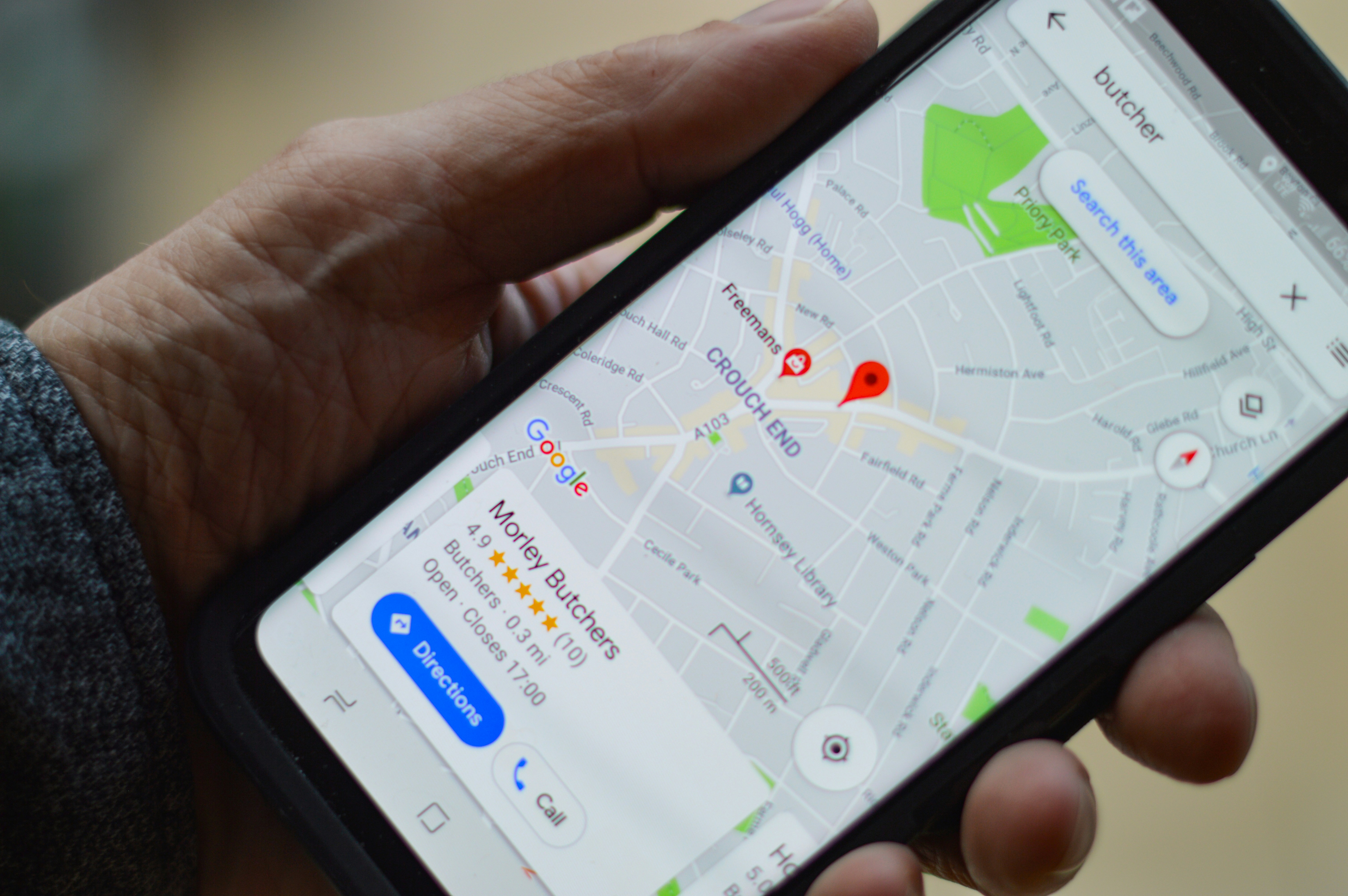
The way people find a plumber, a dentist, or a dinner spot has changed faster in the last twelve months than it did in the previous decade. Instead of typing "best Italian restaurant near me" into Google and scrolling through ten blue links, people now ask ChatGPT, Perplexity, or Google's AI Overviews a direct question and expect a direct answer. That answer either includes your business, or it includes your competitor's. There is very little room in between.
This shift has a name: Answer Engine Optimization, or AEO. And for local businesses, it is no longer an optional experiment on the marketing roadmap. It is quickly becoming the difference between being the business an AI assistant recommends by name and being a business that never enters the conversation at all.
At Vinespire, we help brands and businesses get recommended by AI platforms, and local businesses are exactly where we are seeing the fastest, most measurable shifts in consumer behavior. This article breaks down what AEO actually means for a local business, why it matters right now, and exactly how to build a strategy that gets you cited, quoted, and recommended.
What Is AEO, and Why Does It Matter So Much for Local Businesses?
Answer Engine Optimization is the practice of structuring your website, your listings, and your content so that AI systems can easily read, trust, and cite your business as the answer to a customer's question. Traditional SEO was built around ranking a page as high as possible so a human clicks on it. AEO is built around something different: making sure an AI system can confidently extract a fact about your business and repeat it as a recommendation, often without the customer ever visiting your website at all.
For a local business, this distinction carries real financial weight. According to BrightLocal's 2026 Local Consumer Review Survey, the share of consumers using AI to find local businesses jumped from just 6% in 2025 to 45% in 2026, which is one of the fastest behavioral shifts ever recorded in consumer search habits. That is not a gradual trend line. That is nearly half of all local searchers changing how they discover businesses in the span of a single year, and most local business owners have not caught up yet.
Voice and AI-assisted local search also skews heavily toward buyers who are ready to act, not casual browsers who are just looking around. Industry research on local AEO shows that 58% of voice searches are specifically looking for local business information, and these searchers tend to be closer to a purchase decision than someone typing a generic keyword into a search bar. When an AI assistant is asked "who's the best plumber near me" or "what restaurant should I try downtown," it is answering someone who wants to act now, not someone doing idle research three weeks before deciding.
The Local AEO Opportunity Gap Is Enormous Right Now
Here is the part that should really grab your attention if you run a local business: almost none of your competitors are doing this yet, which means the businesses that move first are going to capture a disproportionate share of AI-driven recommendations for years to come.
Research from FindSkill.ai found that 88% of local businesses currently have no AI-search strategy whatsoever, even as nearly half of local consumers have already shifted to using AI tools to find businesses like theirs. That gap between consumer behavior and business readiness is exactly where the opportunity lives, and it will not stay open forever. Early movers in any search shift, whether it was mobile search in 2010 or voice search in 2018, captured outsized visibility simply because they showed up while the field was still empty.
Metric | 2025 | 2026 | Source |
|---|---|---|---|
Consumers using AI to find local businesses | 6% | 45% | BrightLocal, 2026 |
Local businesses with an active AI-search strategy | — | 12% | FindSkill.ai, 2026 |
Voice searches seeking local business info | — | 58% | Connect Media Agency AEO Guide |
Projected global voice commerce value | — | $80 billion | Local AEO industry research, 2026 |
Keywords triggering AI Overviews with low (0–40) difficulty | — | 80% | Jack Limebear, State of AEO 2026 |
This last stat matters more than it looks at first glance. Long-tail, low-competition local keywords, exactly the kind small businesses have chased for years, are now precisely the queries most likely to trigger an AI-generated answer instead of a traditional list of links. In other words, the queries you already know how to rank for are becoming the queries where AI decides to answer directly, which means winning the click is no longer enough. You now have to win the citation.
How AI Platforms Actually Decide Which Local Businesses to Recommend
AI answer engines do not "rank" businesses the way Google's algorithm ranks web pages. Instead, they synthesize an answer by pulling from multiple trusted sources at once, cross-referencing details like your business hours, service area, pricing, and reputation, and then deciding which business or businesses are confident enough to name. This means the underlying mechanics of visibility are different, and a strategy built purely around traditional keyword rankings will leave real gaps in how AI systems perceive your business.
A few structural factors consistently determine whether your business gets named as the answer:
Entity clarity across the web. AI systems need to be able to confirm, from multiple independent sources, exactly who you are, what you do, and where you operate, and any inconsistency between your website, your Google Business Profile, and third-party directories creates doubt that makes an AI system less likely to cite you confidently. A mismatched phone number or an outdated address on even one major directory can quietly undermine trust signals across the board.
Structured, extractable content. Depex Technologies' research on local AEO makes the point bluntly: if an AI bot cannot read your website efficiently, it cannot recommend you, no matter how good your business actually is. This means clean HTML, clear headings, FAQ sections written in plain question-and-answer format, and schema markup that explicitly labels what your content is about.
Authoritative, citation-worthy content. A widely cited Princeton study on generative engine optimization found that adding statistics and authoritative citations to a page lifted AI visibility by roughly 40%, which is a far bigger lever than schema markup alone. AI systems are, in effect, looking for the same signals a careful human researcher would look for: real numbers, credible sourcing, and specific detail rather than vague marketing language.
Structured FAQ and schema markup. Semrush's research found that pages using FAQ schema are roughly 60% more likely to be featured in AI Overviews, and Frase reported that nesting FAQPage schema inside Article schema improves extraction confidence by around 40% compared to flat schema alone. These are not massive engineering lifts, but they require intentional structuring that most local business websites simply do not have in place today.
An active, complete Google Business Profile. Local SEO and AEO guidance for 2026 is consistent on this point: Google Business Profile remains one of the strongest data sources feeding AI-generated local search results, and it is genuinely non-negotiable for any local business trying to show up in AI recommendations.
Building an AEO Strategy for Your Local Business: A Step-by-Step Framework
1. Audit your entity consistency everywhere you appear
Before writing a single new page, pull up every place your business is listed online, including your website, Google Business Profile, Yelp, Facebook, industry directories, and local chamber of commerce listings, and confirm that your name, address, phone number, hours, and service descriptions match exactly across every one of them. AI systems build confidence through cross-verification, so even small inconsistencies between sources can quietly reduce the odds that your business gets named as a trusted answer.
2. Rebuild key pages around real customer questions
Instead of writing a generic "About Us" or "Services" page, structure your most important pages as direct answers to the exact questions your customers are already asking, such as "how much does a residential roof replacement cost in [city]" or "what's the average wait time for a same-day dental cleaning near [neighborhood]." Lead each section with a clear, concise answer in the first sentence or two, and then expand with supporting detail, because AI systems tend to extract the first clearly stated answer on a page rather than digging through paragraphs of preamble to find it.
3. Add real numbers, specifics, and proof
Vague claims like "affordable pricing" or "years of experience" do very little to earn an AI citation, but specific, verifiable details do real work here. Replace "affordable" with an actual price range, replace "years of experience" with the exact number of years and the number of jobs completed, and replace generic praise with specific customer outcomes, because the Princeton GEO research referenced earlier found that this kind of specificity is one of the single strongest levers for AI visibility available to any business today.
4. Implement structured data and FAQ schema properly
Add FAQPage schema nested inside Article schema on your key service pages, using the exact questions customers type into search bars and voice assistants as your FAQ headers. This is a technical step, but it is one of the more accessible wins available, since it does not require an entirely new content strategy, just better structuring of information you likely already have.
5. Strengthen your Google Business Profile like it's a full content asset, not a listing
Fill in every available field, upload fresh photos regularly, respond to every review with specific, detailed replies rather than generic thank-yous, and use the Q&A and posts features actively rather than treating your profile as something you set up once and forget. Because Google Business Profile data feeds directly into AI-generated local answers, an incomplete or stale profile is one of the fastest ways to disappear from AI recommendations entirely.
6. Earn mentions on third-party sites AI systems already trust
AI answer engines lean heavily on independent validation, meaning a mention in a local news article, an industry blog, or a well-regarded review site carries real weight in how confidently an AI system will recommend you. Building relationships with local journalists, industry publications, and review platforms is no longer just a branding exercise, it is a direct input into your AI visibility.
7. Track your AI visibility the way you already track your search rankings
Just as you would track keyword rankings in traditional SEO, you now need a process for regularly checking how your business shows up when real customer questions are asked across ChatGPT, Perplexity, Google AI Overviews, and Gemini. This is a newer discipline with less mature tooling than traditional rank tracking, but even a simple manual process of testing common customer queries every few weeks will tell you far more about your real-world AI visibility than guessing.
Real-World Signals That AEO Is Already Working
Even in these early days, there is a growing body of evidence that businesses investing in AEO fundamentals are seeing tangible results. CXL's comprehensive AEO guide points to Mangools, an SEO tool provider, that structured a blog post around a concise, direct answer and captured a featured snippet that meaningfully boosted both traffic and brand exposure. The same research notes that local service businesses optimizing their Google Business Profiles and building voice-friendly FAQ content have seen measurable increases in calls generated directly from voice search.
NerdWallet offers a particularly instructive example at scale: even as its overall organic traffic declined amid the broader industry shift toward AI-generated answers, the company maintained its revenue growth by focusing on providing expert-level, clearly structured answers across multiple platforms rather than chasing traditional traffic numbers alone. The lesson for local businesses is the same one at a smaller scale, since visibility inside an AI-generated answer can drive high-intent leads even when raw click volume looks flat or declines.
A Quick Warning: AEO Doesn't Replace Local SEO, It Extends It
It's worth being direct about one common misconception: AEO is not a replacement for traditional local SEO, and treating it as one is a mistake that could cost you visibility on both fronts. Industry guidance is consistent here, particularly for service businesses like plumbers, dentists, and restaurants where someone searching "emergency plumber near me" needs immediate action, not an AI-generated explanation. In cases like these, strong traditional local SEO and a well-optimized Google Business Profile remain absolutely essential, while comprehensive AEO ensures you are also visible across the growing number of AI-driven discovery channels layered on top.
The businesses winning right now are the ones treating this as hybrid optimization rather than an either-or decision, building the traditional infrastructure of site speed, crawlability, and backlinks while layering in the structured data and entity clarity that AI systems specifically need to interpret and trust their content.
The Bottom Line
Local search is not being replaced overnight, but it is being reshaped in real time, and the businesses that adapt early are positioned to capture a disproportionate share of the next decade's customer discovery. With AI-assisted local search adoption jumping from 6% to 45% of consumers in a single year, and with 88% of local businesses still doing nothing about it, the opportunity to become the default recommended answer in your market is wide open right now in a way it will not be in two or three years.
The businesses that win the next era of local discovery will not necessarily be the ones with the biggest ad budgets. They will be the ones AI systems trust enough to name by default, and that trust is built through the deliberate, structured, citation-worthy work described throughout this article.
Vinespire helps brands and businesses get recommended by AI platforms, building the entity clarity, structured content, and citation-worthy authority that answer engines are looking for. If you're ready to make sure your business is the one AI recommends, not the one it overlooks, get in touch with our team to talk through what an AEO strategy looks like for your local business.